Skip to content

So you know you want a new lawn and you’re keen to install it yourself. But do you know how to prepare for turf installation, specifically how to prepare the ground for turf to be successfully laid? The best lawns are all about the best preparation – this is a critical step ensuring a longer-term healthy lawn.
While laying turf provides an instant visual transformation, if you don’t do the hard work of proper soil preparation beforehand, those lush green turf slabs can quickly lose their shine. The end result? A lawn that takes longer to establish, becomes stunted during the crucial early months, or worst of all – dies off completely.
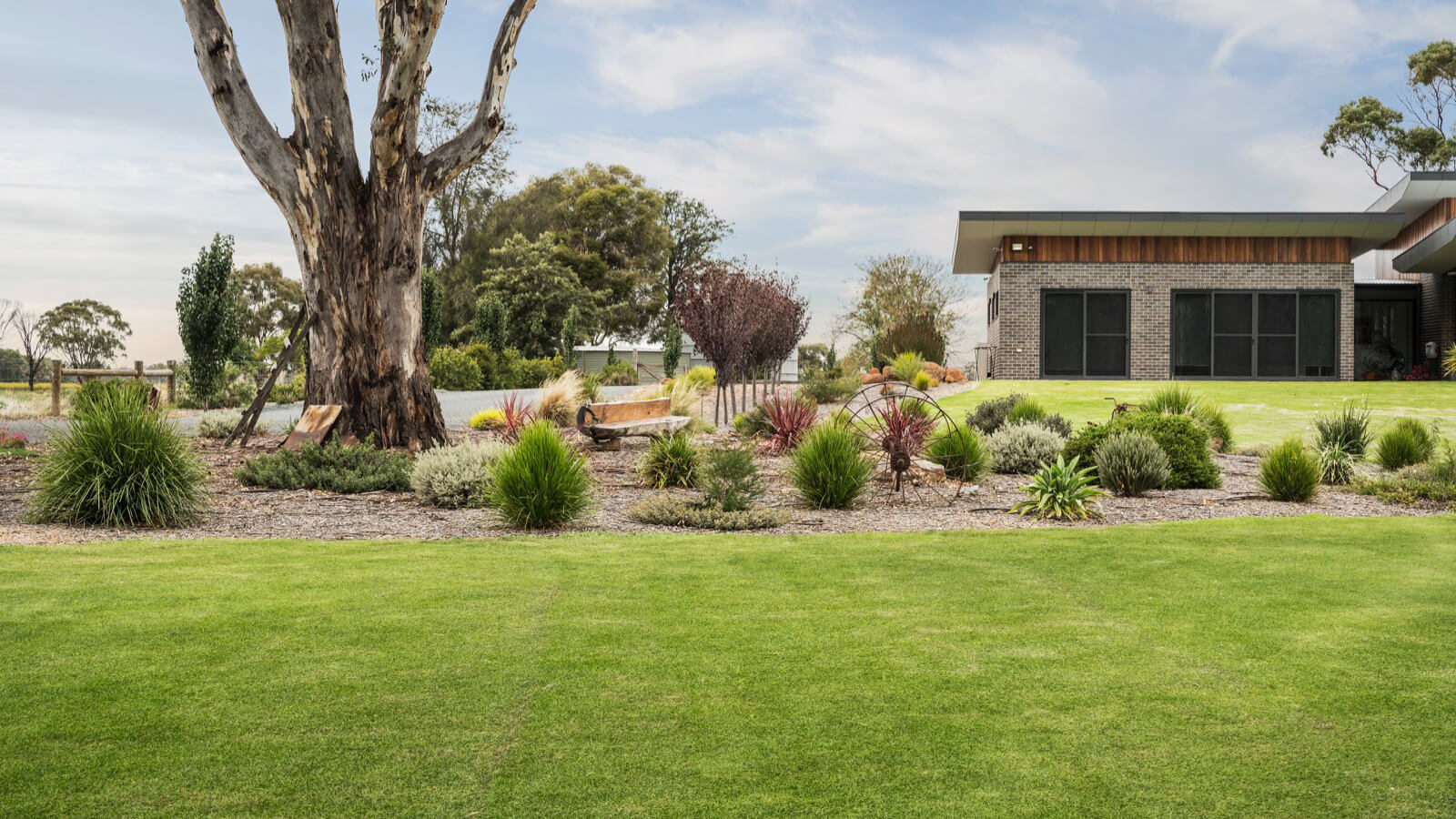
Follow our turf preparation guide to avoid disappointment and give your new yard its best possible start. By first learning how to prepare the ground for turf, you help your new turf’s root system establish more quickly, access nutrients and water, and grow into a resilient and beautiful lawn.
Step 1: Remove Existing Grass and Weeds Before Laying Turf
Your first task in preparing the ground for turf is to create a completely clean slate. We recommend you do not lay turf on top of any existing grass to avoid any future weed problems. Any plants or foliage will compete with your new turf and can introduce pests or diseases.
The Chemical Method (Fastest)
It is advisable to spray out existing grass using Roundup or a similar non-selective product, then remove it from the site. Apply the herbicide according to the manufacturer’s instructions and wait 7-14 days for the existing vegetation to die off completely before cleaning the site, ready for new soil.
The Mechanical Method (Chemical-Free)
For those who are set on keeping their lawn preparation for turf chemical-free (or as close to it as possible), hiring a small kanga, or using a professional digger/bobcat service are excellent options. For smaller areas, you can also use a shovel or mattock to break up and remove the old lawn.
When you use chemicals (like glyphosate) to kill an old lawn, you’re left with dead organic matter and whatever soil was already there. When you remove the top 150mm (about 6 inches) of material with a machine, you aren’t just getting rid of the old grass, you are clearing out poor-quality soil, weeds, and seeds to make a “pocket” for high-quality sandy loam.
Step 2: Soil Preparation for Turf Laying
Now that the area is clear, it’s time to focus on preparing the soil for turf to be laid. The goal is to create a rich, workable base at a depth of at least 100-150mm, an essential foundation for warm-season grasses like buffalo, kikuyu, and couch varieties to establish healthy roots.
Working with the Existing Soil
If you were planning to lay your turf on a clay or hard surface, it would be recommended that you rotary hoe or till the soil to a depth of 100mm to make the surface more workable and help with plant root initiation. This process helps to relieve compaction and improve drainage.
Improving Poor Quality Soil
Applications of gypsum may help improve hard clay soils. For sandy soils that drain too quickly, adding organic matter like compost will improve water and nutrient retention.
Doing a pH Test
If you’re really keen to take a deep dive in how to prepare the ground for new turf, testing your soil’s pH is a smart move. This tells you if your soil is acidic or alkaline. Most lawn grasses prefer a slightly acidic to neutral pH (6.0-7.0) to best access nutrients. You can grab a simple pH test kit from your local nursery or hardware store. If your soil is too acidic (low pH), you’ll need to add lime; if it’s too alkaline (high pH), adding sulphur will help bring it back into the ideal range for your new lawn.
Adding New Topsoil (Turf Underlay)
If you have minimal topsoil onsite, you will need to import a quality turf underlay (a sandy garden loam) from your local garden supplier. Even if your existing soil is decent, adding about 100-150mm of the correct turf blend soil mix (around an 80:20 ratio of sand to organic matter) is one of the best ways on how to prep for turf laying with optimal results.
A well-structured turf underlay promotes consistent drainage, helps roots anchor deeply, and ensures even moisture retention across every square metre of your new lawn.
Step 3: Rake, Level and Create Proper Drainage
This is an important step in preparing for turf laying, and is key to achieving a professional, smooth finish and preventing future water issues. A level soil surface ensures there are no low spots where water can pool.
Raking and Levelling
Use a large rake (we recommend an Easy Level Rake or soil-spreader) to spread your topsoil evenly across the lawn area. Work the rake back and forth to remove bumps and fill in any hollows, creating a perfectly smooth surface.
Grading for Drainage
Even though turf allows water to soak through, heavy rain can still result in surface water pooling if the subgrade is uneven or compacted. Aim to maintain a gentle slope (around 1–2 cm fall per metre) away from your house, garden beds, and retaining walls to prevent runoff toward structures and help water move through the soil profile evenly.
Setting the Final Height
Your prepared ground needs to be slightly lower than your paths and edges to allow the turf to sit flush. We recommend your finished surface sit approximately 25mm – 30mm below concrete paths, or garden edges for Couch and Eureka Kikuyu varieties. If you are installing Sir Walter DNA Certified Buffalo Grass, you will need to leave a 40mm gap below your edge.
Lightly Compact the Soil
Once you’re happy with the level, you can use a lawn roller (half-filled with water) or simply walk over the entire area on the balls of your feet to lightly compact the soil. This removes any hidden air pockets but be careful not to overdo it. Heavily compacted soil affects drainage, so give it a final light rake to loosen the top layer.
Step 4: Apply Starter Fertiliser
The final step in how to prepare the ground for laying turf is to add a suitable starter fertiliser to the topsoil. This provides the newly laid lawn with all the nutrients and trace elements it needs during the establishment phase. We recommend applying a quality lawn food to your prepared surface, such as Lawn Solutions Australia’s Lawn Launcher product.
As a Coolabah Turf customer, you will receive free starter fertiliser with your order. Apply it evenly across the entire area and lightly rake it into the top 25mm of your turf underlay. Now you are ready to lay instant turf.
Time to Lay Your Turf!
Having done all the right preparation for the soil, you’re ready for the exciting part. Here are the key points to remember in addressing the question of how to prepare for laying turf:
- Lay it Fresh: Grass/turf is a living product. Aim to lay your instant lawn immediately after the turf’s delivered, or at least on the same day, to prevent the slabs from drying out.
- Use a Straight Edge: Start laying your turf along the longest straight edge of the area, like a driveway or path, to keep your lines neat.
- Stagger the Joints: Lay the turf slabs in a staggered ‘brick’ pattern. This helps hide the joins for a seamless, uniform look once established.
- Cut to Fit: Use a sharp knife to neatly trim slabs to fit around curves, sprinkler heads, or garden edges.
- Water Immediately: As soon as you finish laying a section, water it thoroughly. Don’t wait until the whole lawn area is finished. It’s critical to keep the lawn wet throughout the first few weeks. You’ll need more water if you’re laying turf in summer or hot weather, and less if it’s raining. The key is to give enough water to prevent the turf slabs from drying out.
- Avoid Walking on It: Try to work from the turf you’ve just laid to minimise walking directly on the prepared soil. Once it’s all down, stay off the newly laid turf as much as possible for the first few weeks. Wait until the roots are established — gently tug at one corner; if it doesn’t lift easily, it’s ready for the first mow.
Read our step-by-step guide to laying turf and our watering guide for more information on year-round lawn care.
Speak to a Turf Specialist
Our friendly team is here to provide all the information you need. Contact us today for expert advice and a free quote.